Enablement · Learning & Development · Digital Adoption
I turn complex work into confident performance.
I design learning and enablement solutions that connect business needs with the work people need to do. My experience spans onboarding, performance support, process improvement and technology adoption, with Learning & Development as my specialist area. This portfolio shows examples of my analysis, design, development and delivery.
Enablement first. Learning & Development as my specialism.
I look at the business need, the people involved and the conditions that affect their performance. That helps me identify where learning, clearer processes, practical support or technology adoption can contribute. The areas below show how I approach that work.
My Enablement approachHow I connect learning with workplace performance
Strategy & Alignment
I connect enablement priorities with business goals, customer needs and the expectations of each role.
Leadership & Coaching
I design support that helps managers and leaders reinforce skills and behaviours in everyday work.
My specialist area
Learning, Content & Performance Support
I design and develop onboarding, eLearning, facilitated learning, job aids and opportunities for practice.
Process & Workflow
I translate complex processes into clear guidance and support people can use while working.
Technology & Infrastructure
I use learning platforms, content systems and digital adoption tools to make learning and support easier to access and use.
Operating Model & Governance
I help establish ownership, consistent processes and coordination across the teams involved in enablement.
Measurement & Improvement
I use available evidence, feedback and performance data to review learning needs and refine the solution.
My Learning & Development specialism
From understanding the need to developing and reviewing the solution.
I use ADDIE (Analysis, Design, Development, Implementation and Evaluation) to structure my learning design work. I adapt the approach to the brief, audience and delivery context. The portfolio examples show how I apply these stages across different projects.
AAnalysis
I clarify the business need, audience, performance gap, stakeholders and evidence before deciding what learning is required.
DDesign
I define objectives, learning architecture, learner journeys, modalities, practice and performance support.
DDevelopment
I create eLearning, storyboards, facilitator materials, job aids, onboarding assets, scenarios and supporting content.
IImplementation
I support delivery, facilitation, onboarding, adoption and reinforcement in the real operating environment.
EEvaluation
I use available evidence, feedback and performance measures to review what is working and improve the solution.
Selected work
My selected work
These examples show the range of my Enablement and Learning & Development work: identifying needs, designing learning, developing digital experiences and supporting delivery. Each case explains my contribution and includes samples that make the work visible. Labels distinguish original artefacts from extracts with confidential details removed and portfolio recreations.
Many more samples and case studies from my existing work are lined up for inclusion.
I designed and developed this portfolio sample to demonstrate how I translate adult learning principles into practical, scenario-based learning.
Using a fictional onboarding journey, the course shows how I connect learning theory with workplace decisions, build opportunities for practice, and provide feedback that explains the reasoning behind each choice.
What this sample demonstrates
Learning design: a structured journey from understanding principles to applying them in a workplace situation.
Scenario development: realistic choices, consequences and feedback that encourage judgement.
Digital development: responsive Rise lessons, a branching conversation and a custom redesign challenge.
Learner choice: clearly labelled section narration, matching written content and transcripts, with listening optional.
Performance support: a worksheet and personalised summary that help learners carry their thinking into practice.
I created the storyboard and developed the course. The consolidated storyboard sets out the content, narration, interactions and feedback for the current course.
An original portfolio demonstration using fictional people and workplace situations. Illustrations were refined through review.
About this example
An original portfolio sample using fictional workplace situations to demonstrate my learning design and development approach.
Learning design and development
ADDIE in practice
Articulate Storyline 360Original portfolio sample
I designed and developed a course that teaches ADDIE, then puts the method into a realistic performance consulting case.
A stakeholder asks for a course. The learner examines the evidence, distinguishes learning needs from resource and process problems, and builds a recommendation they can revise.
What this sample demonstrates
Teaching and practice across all five ADDIE phases.
An evidence hub, decision feedback and revisable recommendations.
A personalised summary and read planning worksheet.
An original portfolio sample using fictional workplace situations to demonstrate my learning design and development approach.
Learning design and development
Kirkpatrick evaluation
Articulate Storyline 360Original portfolio sample
I created “Did the training work?” to demonstrate how evaluation can connect learning design with evidence of workplace performance.
After learning the four levels, the learner investigates a fictional support-team programme and advises its sponsor. Evidence records, practical decisions and answer-specific feedback help the learner distinguish improvement from unsupported claims about impact.
What this sample demonstrates
Six lessons that move from explanation and practice to an evidence-based recommendation.
A conversation with the programme sponsor and four distinct evaluation records.
Answer-specific feedback, optional retries after incorrect choices and revisable recommendations.
Reviewed-card status labels, reference access and an evaluation planner.
An original portfolio sample using fictional workplace situations to demonstrate my learning design and development approach.
Learning design and development
Bloom’s taxonomy in practice
Rise 360 + Storyline 360Original portfolio sample
I designed this sample to show how learning objectives, practice and assessment can work together at an appropriate level of thinking.
Three Rise lessons introduce the taxonomy and lead into a native Storyline challenge in which the learner repairs a learning brief. The combination demonstrates responsive teaching, a focused custom activity and an on-screen worksheet for applying the method to a real brief.
What this sample demonstrates
Explanations, examples and supported classification practice.
A genuine embedded Storyline “Repair the brief” challenge.
Optional section narration and transcripts, plus a practical alignment worksheet.
An original portfolio sample using fictional workplace situations to demonstrate my learning design and development approach.
Learning design and development
Clinical trial phases
Articulate Rise 360Original portfolio sample
I developed a six-lesson course that explains clinical trial phases through clear visual teaching, purposeful interactions and a realistic briefing scenario.
Bespoke diagrams and purposeful interactions help learners progress from identifying trial phases to explaining the evidence in context. Optional narration introduces each section, with written choices available throughout.
What this sample demonstrates
Bespoke diagrams, labelled graphics and sorting activities.
A three-decision scenario with explanatory feedback and retries.
Optional narration, transcripts and an on-screen quick guide.
An original portfolio sample using fictional workplace situations to demonstrate my learning design and development approach.
System learning and digital adoption
Customer Portal Essentials
Articulate Storyline 360Portfolio example based on my original work
I recreated training developed for a real organisation to demonstrate how I turn portal workflows into clear explanations, application walkthroughs and practical decisions.
The original audience was Customer Success Managers with prior knowledge of data centre infrastructure, processes and terminology. This course builds on that knowledge to teach portal use.
Company identity, branding and confidential information have been removed or replaced. Nova Quay is the fictional replacement identity. The recreated application views use illustrative data.
What this sample demonstrates
Four lessons covering navigation, requests, coordination, reporting and access.
Clear application views and four walkthrough videos with playback controls.
Scenario questions with specific feedback and opportunities to review the relevant topic.
Native lesson navigation, narration and captions.
Information-only review after completion, with a one-click return.
Recreated from my original workplace training. Organisation details and confidential information have been removed or replaced with fictional content.
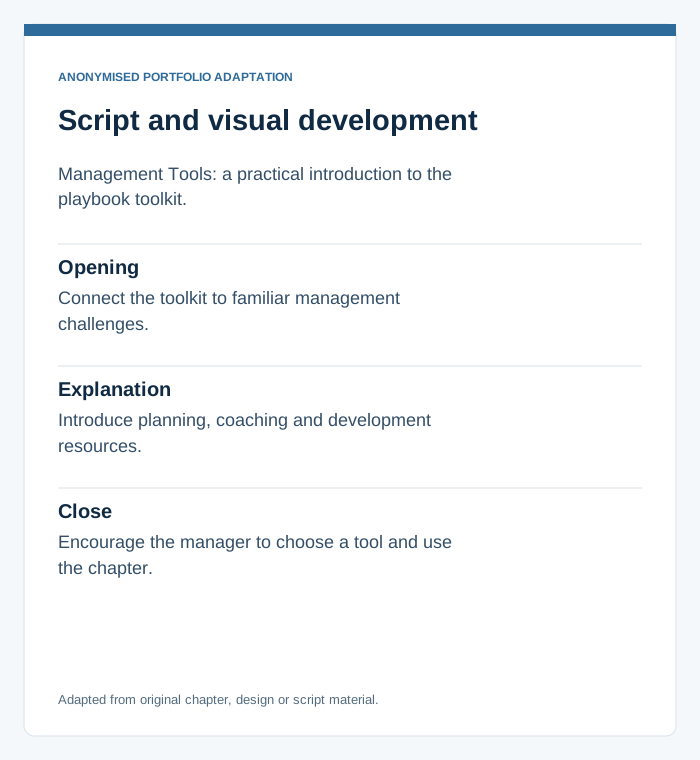
Chapter authoring / Sales enablement
Account Executive Playbook: Chapter Authoring and Onboarding Design
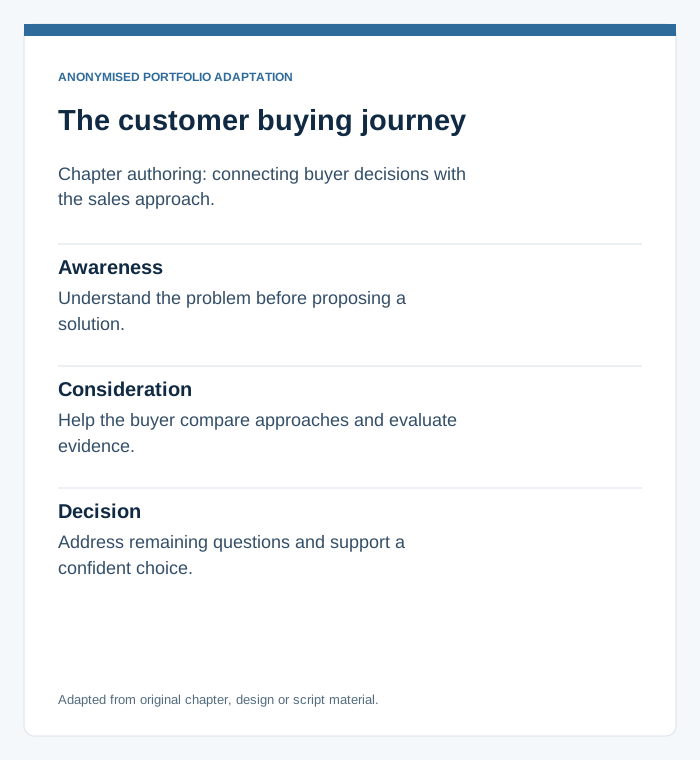
I wrote chapters on Account Executive competencies and the customer buying journey, then developed role-based and resource guidance to support onboarding.
My contribution
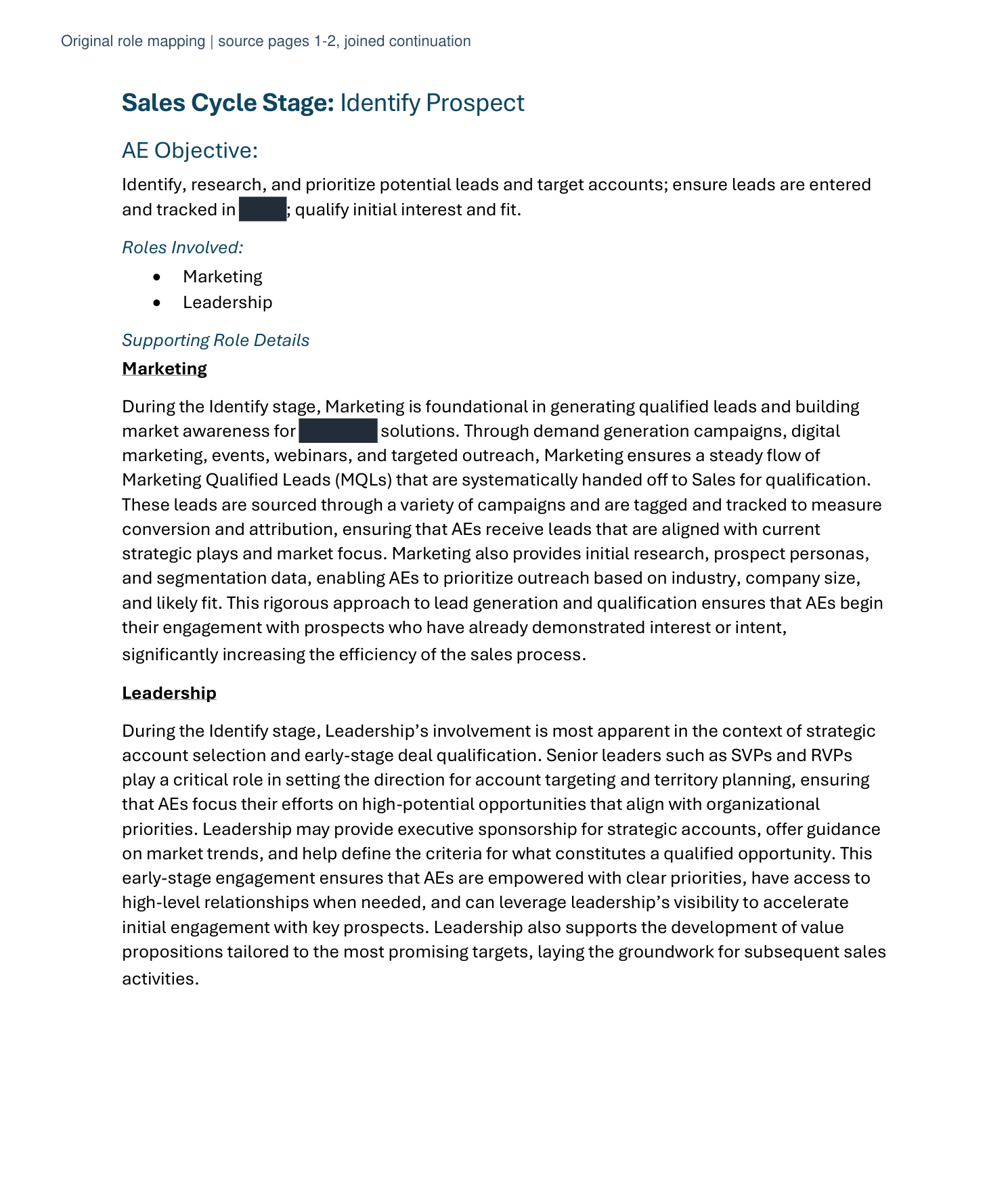
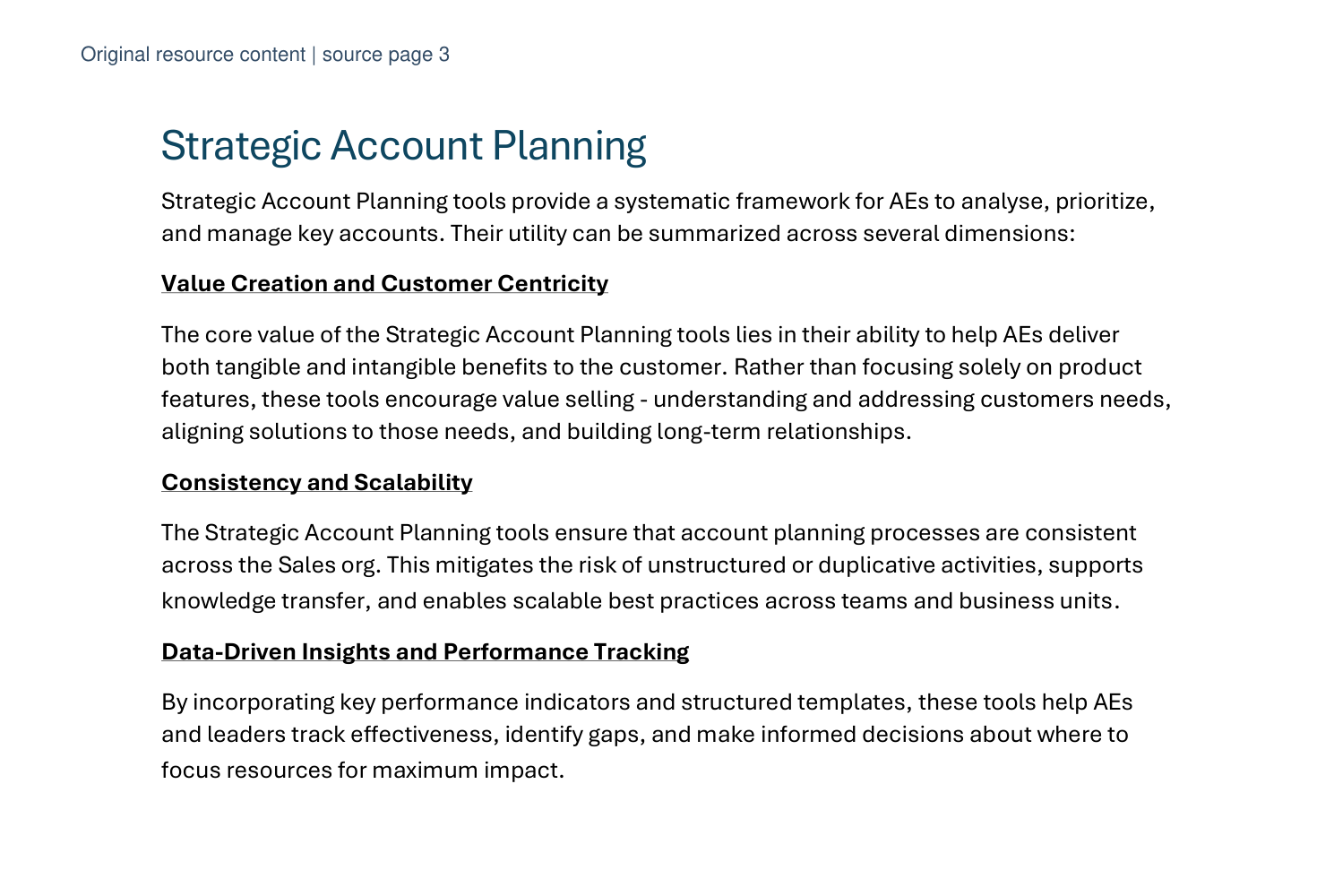
I wrote AE Competencies, The Science of Selling, collaboration guidance and practical resource explanations. I organised supporting roles by sales stage and worked with instructional designers to shape how the material would be introduced and applied across the learning journey.
What the work produced
Two chapters, a stage-based collaboration mapping, resource guidance and analysis of existing training. The full playbook and onboarding courses were shared team outputs.
The samples distinguish my chapter writing and content design from the wider team's work. Original extracts contain redactions; the buying-journey sample is an anonymised adaptation.
Explore the evidence
From chapter writing to onboarding content
Explore two authored chapters and the practical content supplied for onboarding development.
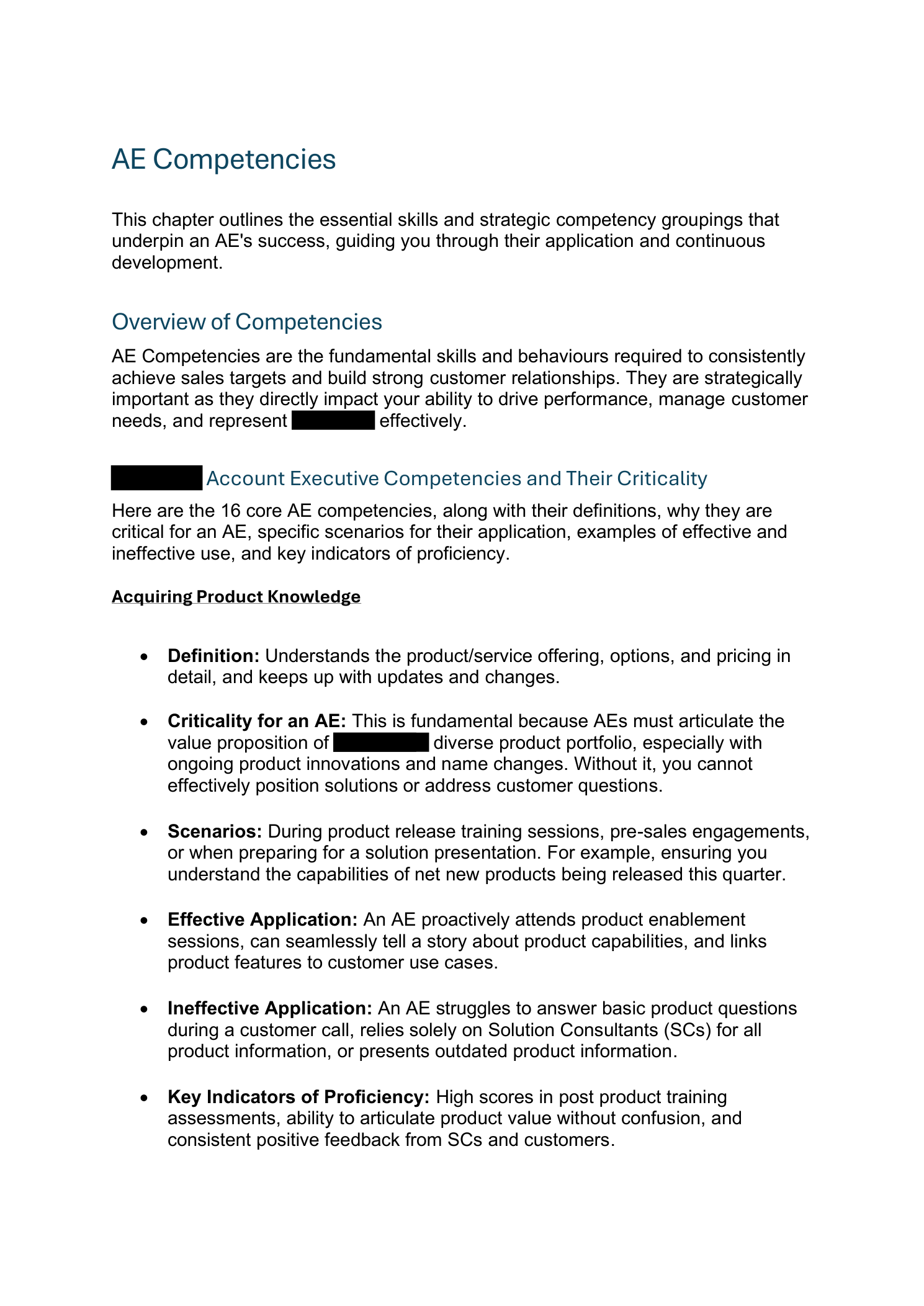
01Original extract
Competency chapter
Definitions, practical scenarios, behaviours and proficiency indicators.
Selected original work with confidential details redacted.
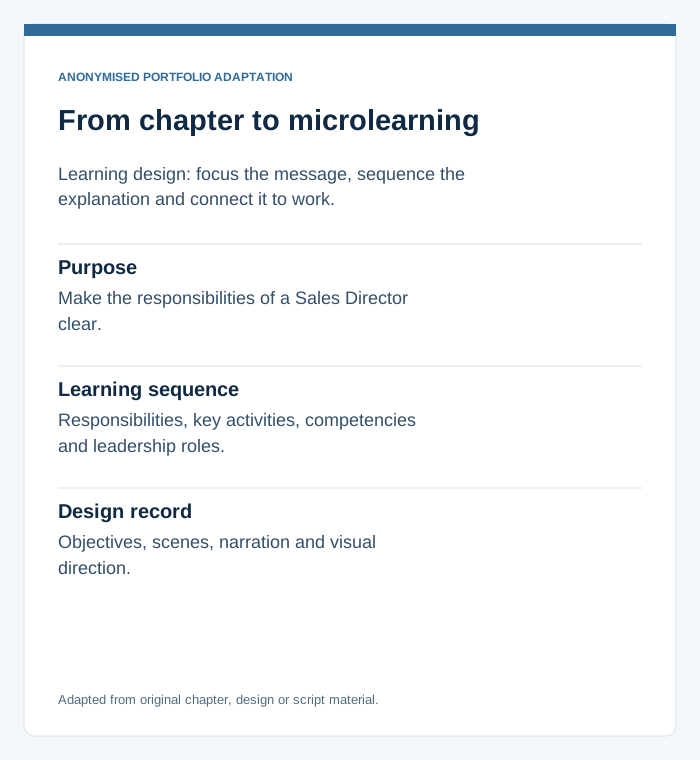
I transformed an existing Sales Director Coaching Playbook into an eight-part video microlearning series, connecting reference guidance with managers' day-to-day responsibilities.
My contribution
My work covered learning design, storyboarding, narration scripts, visual development and video production. I selected the essential messages, made them practical and developed a coherent approach across the series.
What the work produced
Eight chapter-based microlearnings, supported by scene plans, scripts and visual materials. Project records confirm publication of the first six videos and final submission of the remaining chapters.
The source playbook was an existing team resource. These reading samples adapt my original design and production materials; the published videos are not included.
Explore the evidence
From reference material to focused video learning
Explore the instructional design and production decisions behind the series.
01Adapted design sample
Learning design and storyboard
How I selected and sequenced chapter content for focused video learning.
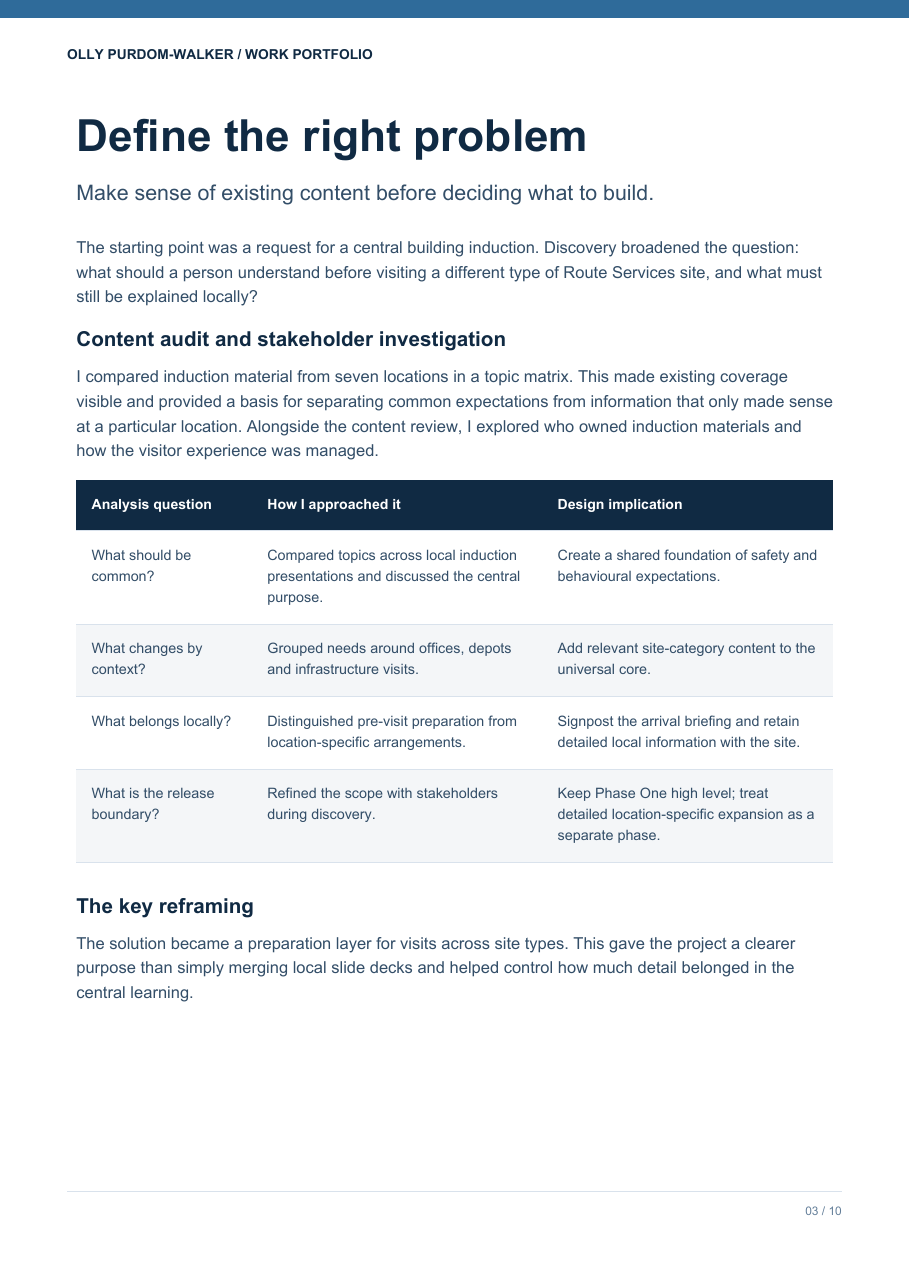
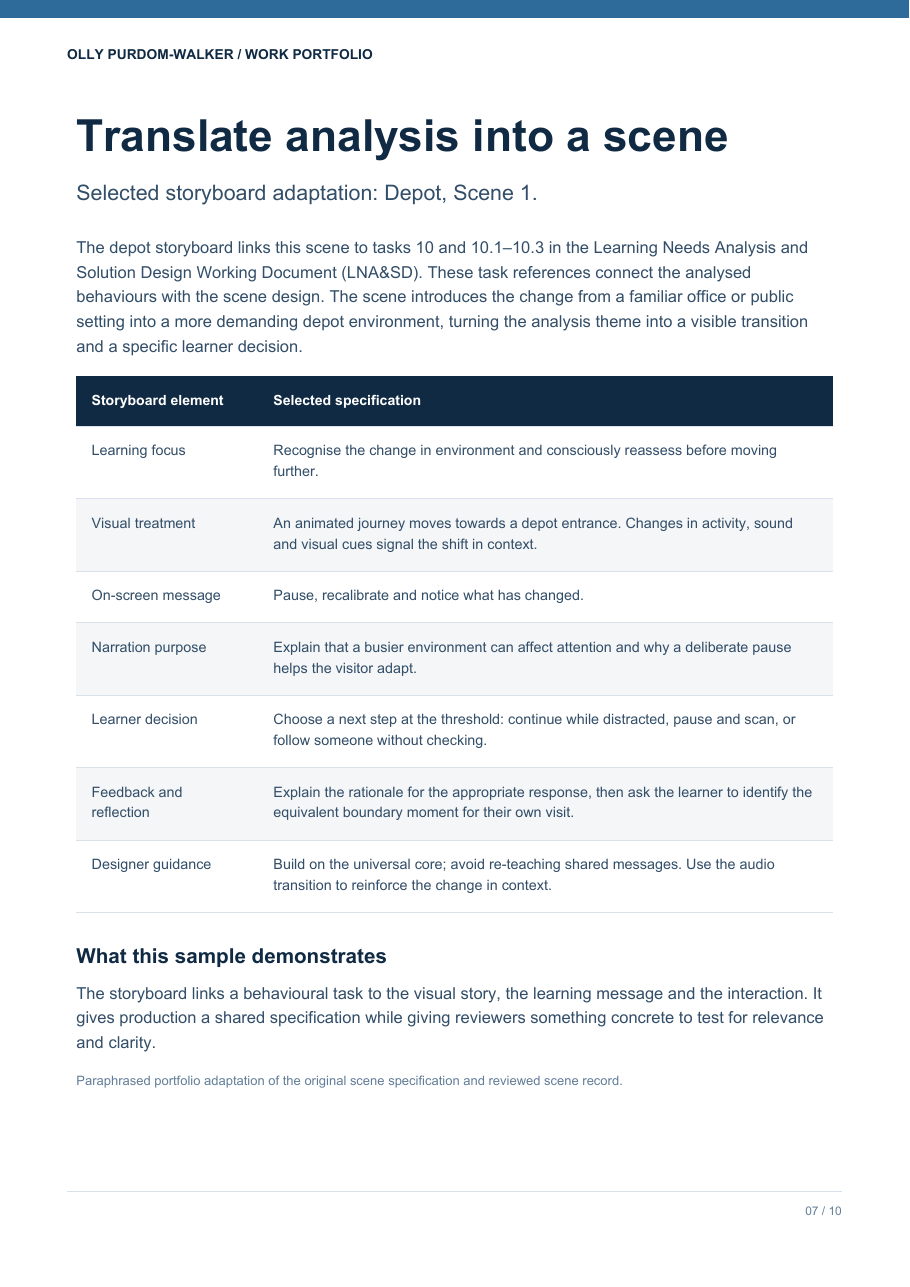
I developed a modular pre-visit induction for Route Services, carrying the work from discovery and learning analysis through solution design, specialist review and media development.
The challenge
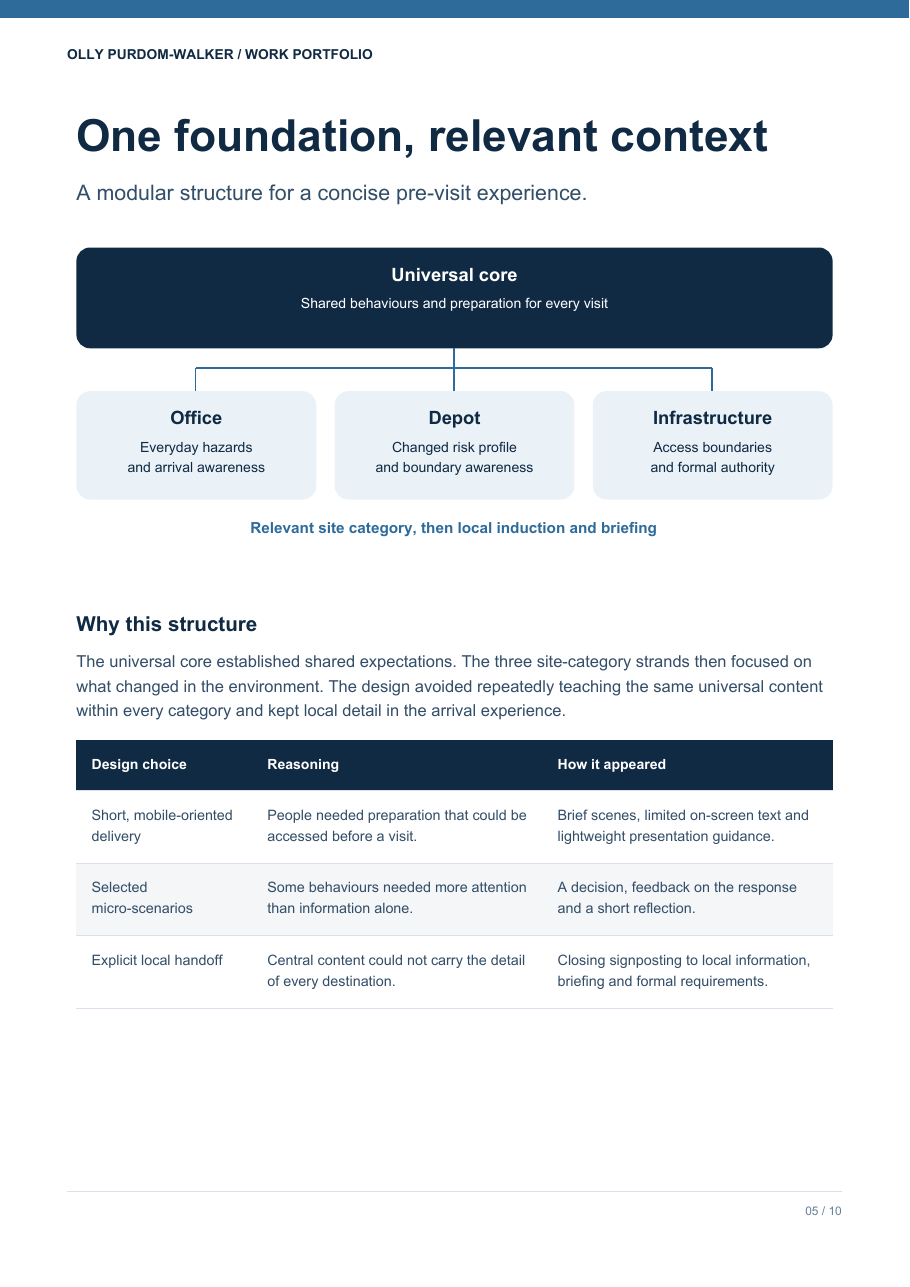
Local induction material contained useful information, but the project needed consistent behavioural expectations across offices, depots and infrastructure settings. The central experience also needed a clear handoff to local induction and formal requirements.
My contribution
Reviewed existing induction content and compared material from seven locations.
Mapped behavioural tasks and their knowledge, skills and attitude requirements.
Developed the Learning Needs Analysis and Solution Design Working Document (LNA&SD) and the Learning Needs Analysis and Design Report (LNA&DR) through peer review.
Designed a universal core with office, depot and infrastructure strands.
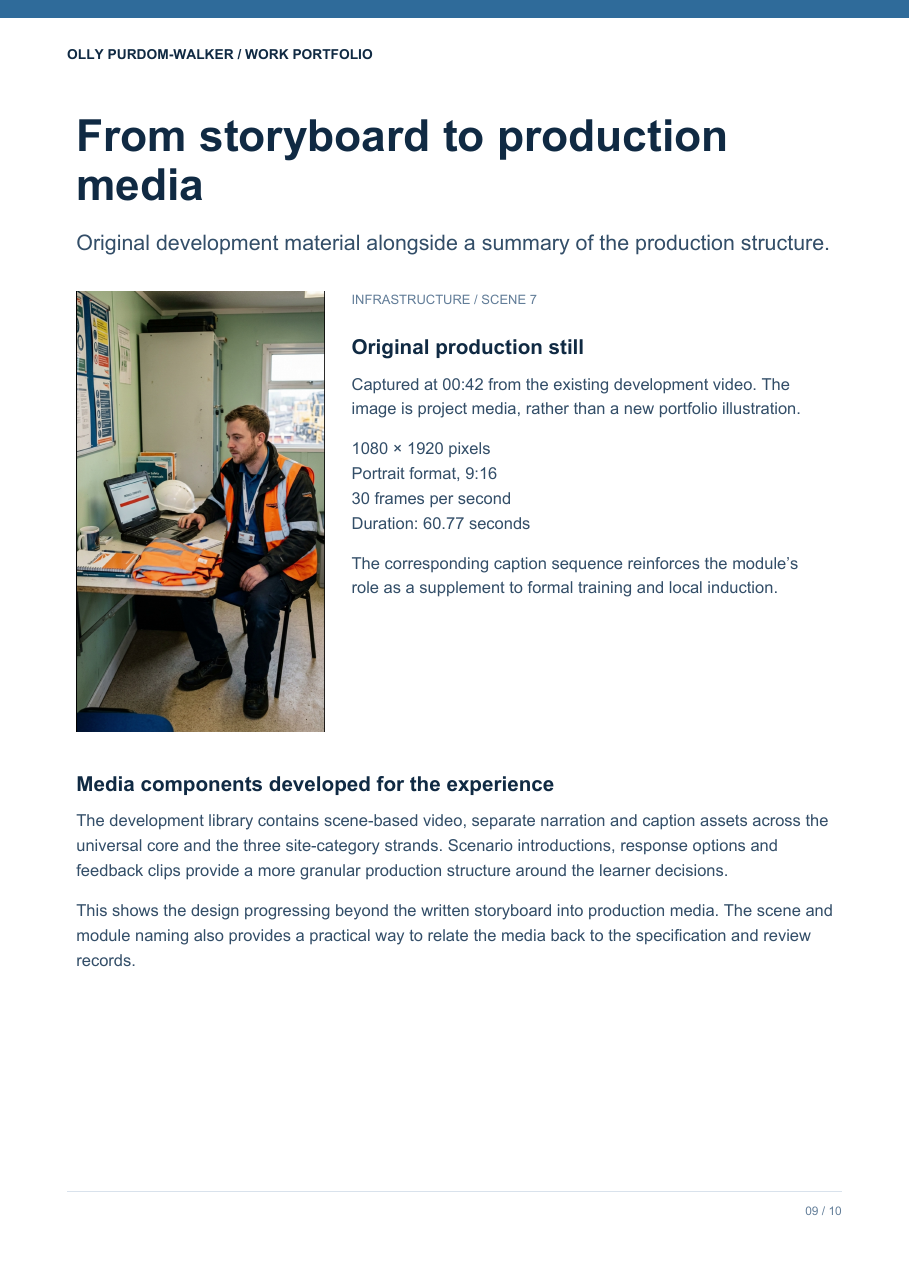
Specified scenes, narration, on-screen text and learner actions, refined them through specialist feedback, and developed production media.
What the work produced
A structured learning approach, task-linked storyboards across four strands, refined safety messaging and scene-based video, narration and caption assets.
Adapted from my original workplace project. Identifying details have been removed; the case describes my contribution and the available project evidence.
Anonymised project example
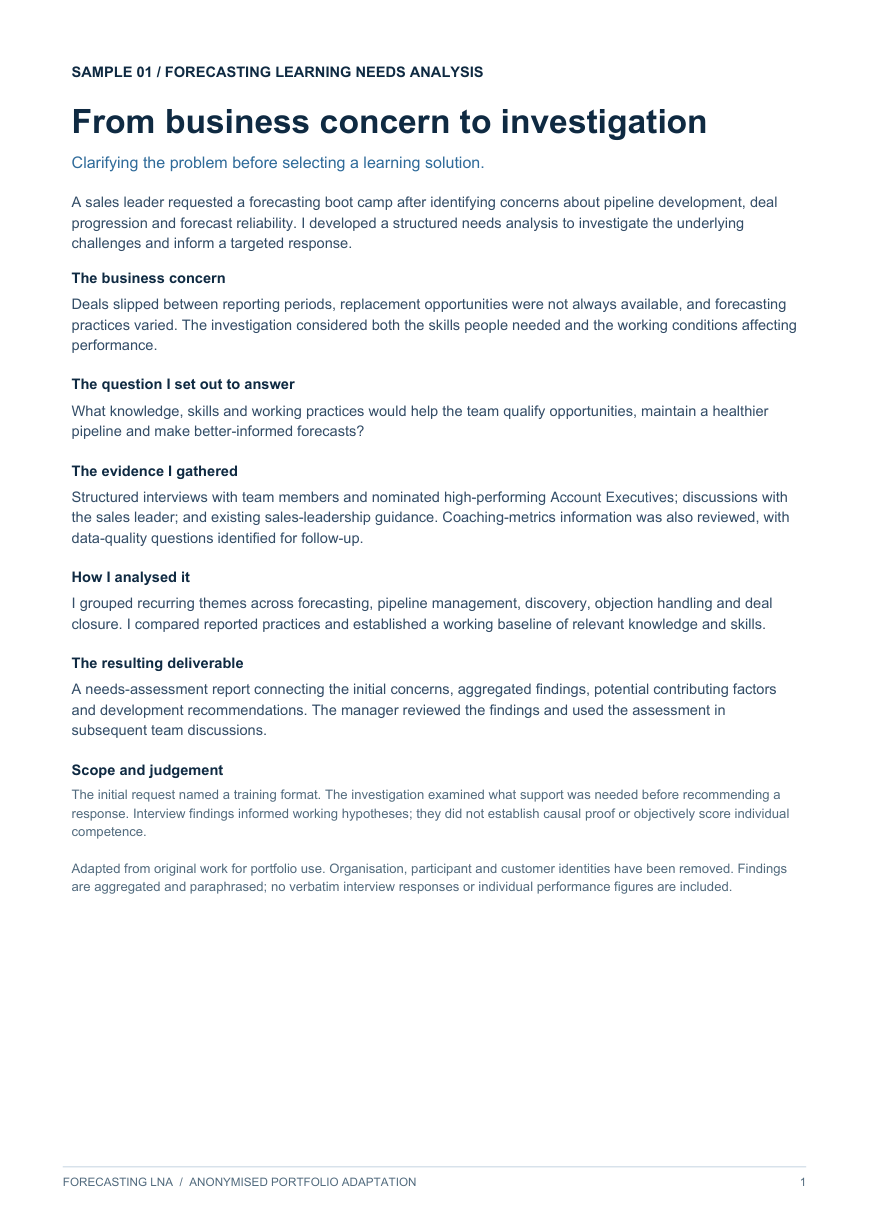
Forecasting and Sales Performance: Learning Needs Analysis
A sales leader requested a forecasting boot camp to address concerns about pipeline development, deal progression and forecast reliability.
My contribution
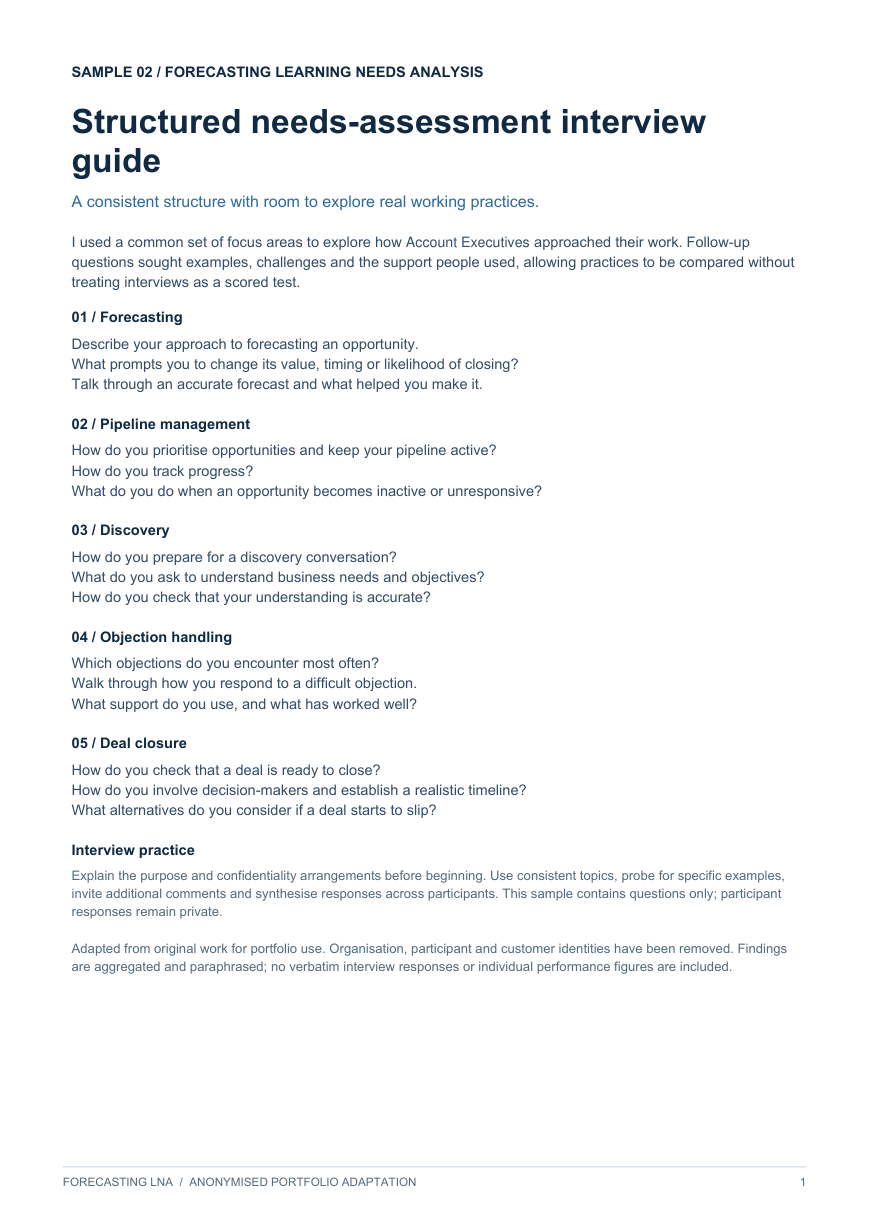
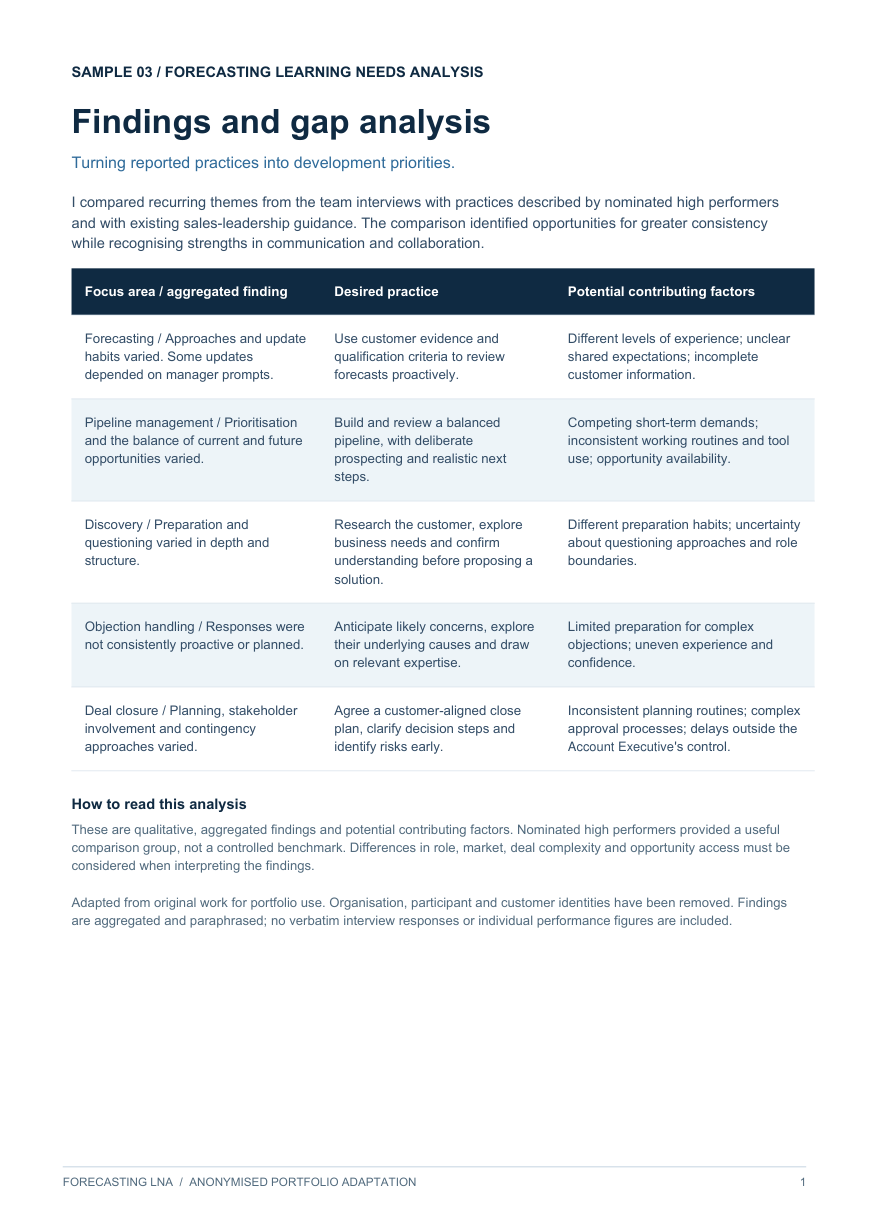
I developed a structured needs analysis to investigate the underlying challenges. Through interviews with team members and nominated high-performing Account Executives, I explored five connected areas: forecasting, pipeline management, discovery, objection handling and deal closure.
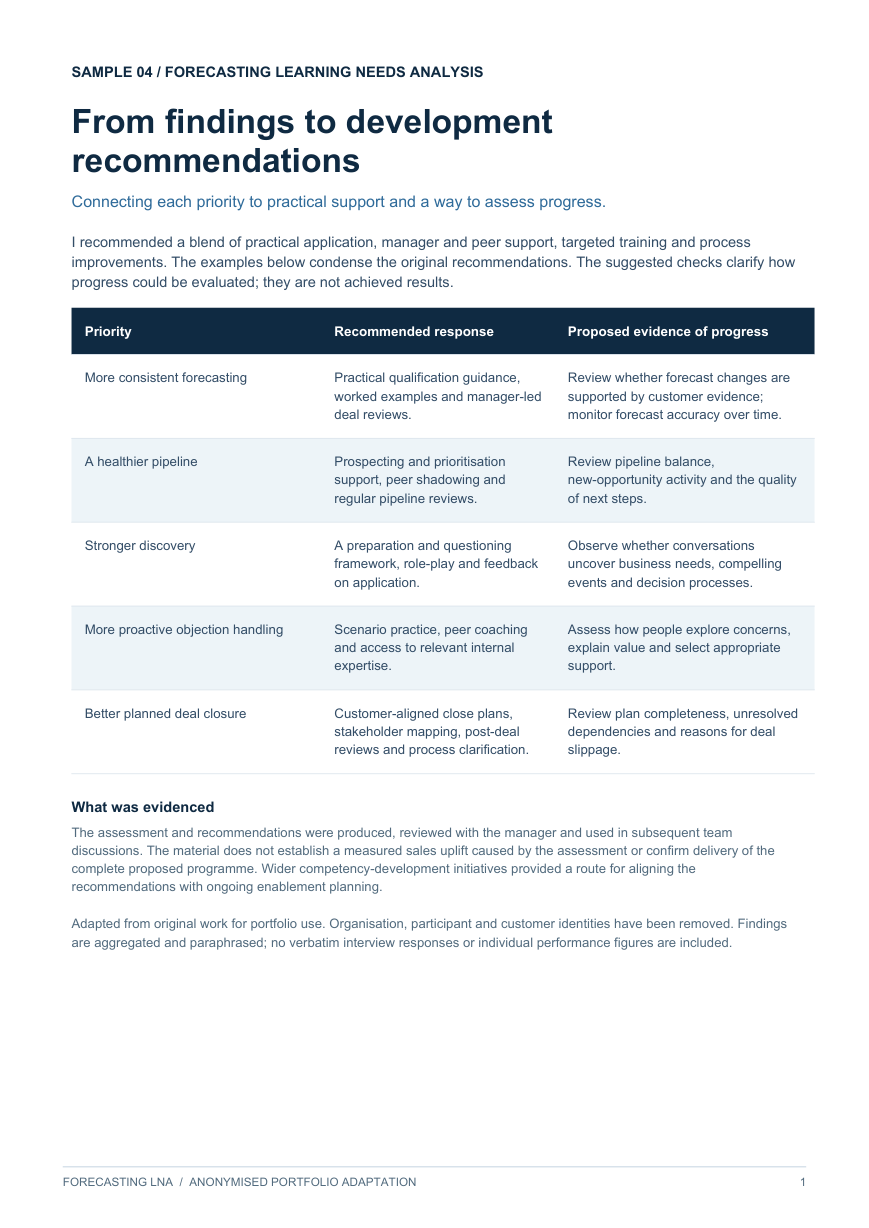
I synthesised recurring themes, compared working practices and established a baseline of relevant knowledge and skills. I then translated the findings into recommendations covering practical application, coaching, peer learning, targeted training and process improvements.
Outcome
The resulting assessment gave the manager a structured basis for discussing development priorities with the team and informing subsequent enablement planning.
About this example
The assessment was produced, reviewed with the manager and used in subsequent team discussions. The evidence does not establish a measured sales uplift caused by this work or confirm delivery of the complete proposed programme.
These samples are adapted from original work. Organisation, participant and customer identities have been removed. Interview transcripts, identifiable responses and individual performance data remain private.
Explore the evidence
From the initial request to development priorities
Four focused samples show the method, analysis and recommendations. Read each sample within the portfolio.
Original work
Read the client portfolio extract
A 14-page selection showing the methodology, anonymised findings, gap analysis and learning recommendations. Identifying details are redacted. Internal programme plans, individual anecdotes and detailed operating guidance are omitted.
Reflection: Interviews helped identify patterns and potential causes. I treated these as hypotheses to validate, considered differences in role and sales context, and recognised that some barriers required process or management support alongside learning.
Strategic Negotiations
Designing practical negotiation learning for enterprise sales teams
I translated subject-matter expertise and qualitative findings into a four-module digital negotiation curriculum for Account Executives. My work connected role-specific learning needs with planning activities, assessment and reflection, and provided a documented foundation for the wider team’s development.
My contribution
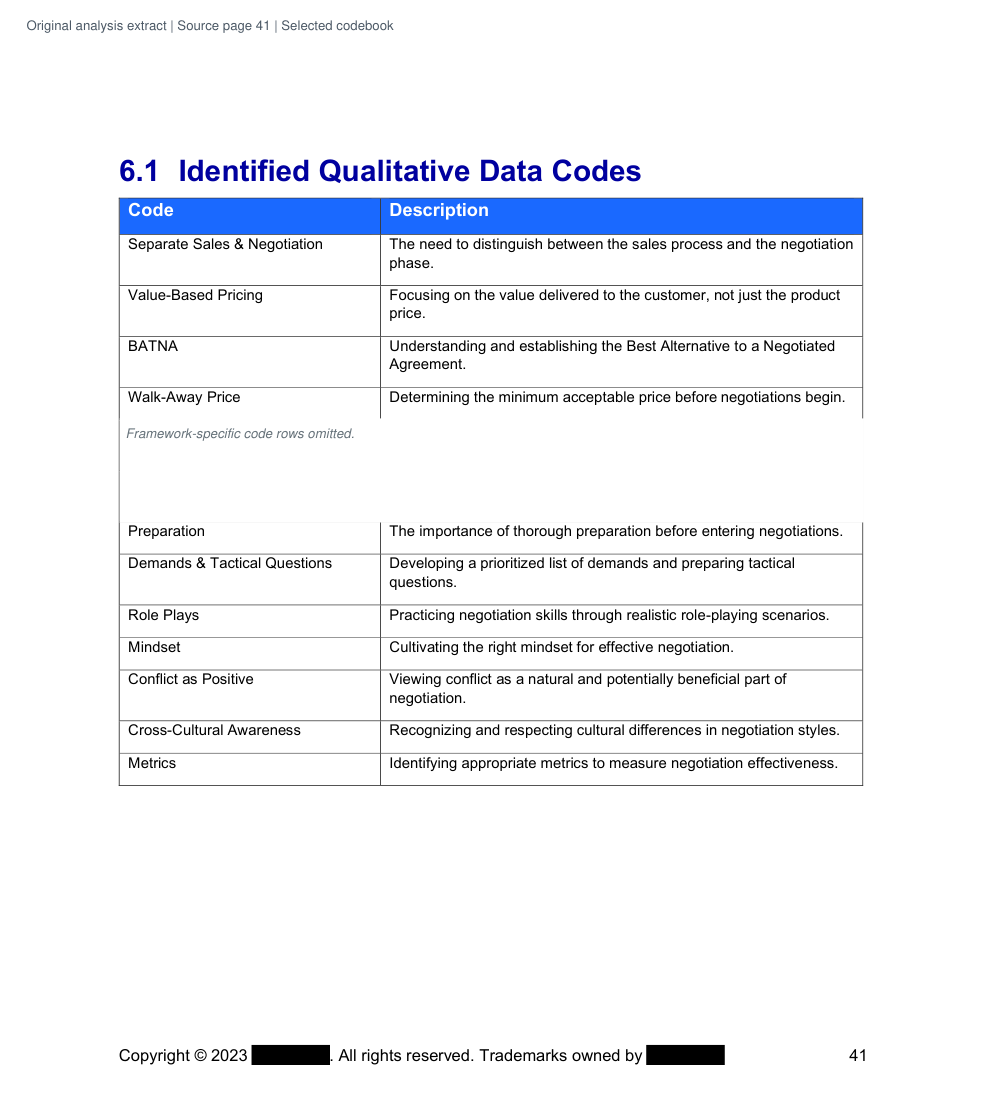
I conducted structured SME discovery, analysed qualitative findings and translated role-specific needs into an AE curriculum and detailed digital design.
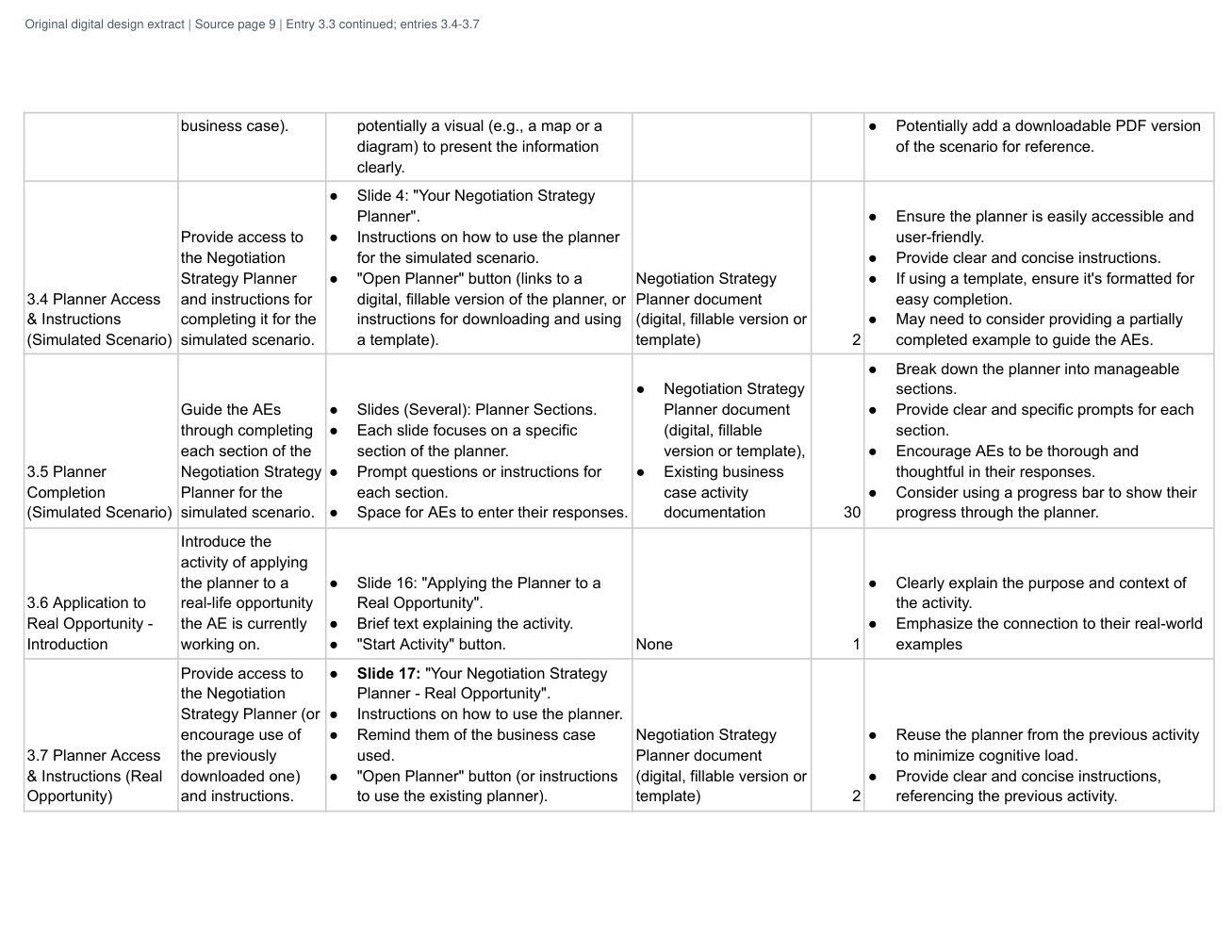
The design connected objectives, proposed screens, resources and developer notes with simulated planning, application to a real opportunity, assessment and reflection. I presented the curriculum for stakeholder review and handed over the research and design for colleagues to continue development.
Outcome
A four-module curriculum and detailed specification, passed on for course development.
About this example
The original extracts preserve selected source wording and layout. Interview quotations, participant identifiers, framework-specific material and unrelated sections are removed. The PDF reader guide explains the selection, editorial changes and source pages.
I handed over the research, curriculum and digital design specification for course development.
From research findings to practical learning design
See the original analysis and design alongside the three existing explanatory samples.
Original work · selected extracts
Read the original analysis and design
A nine-page selection showing the qualitative codebook, interpreted themes and original digital-design tables. Interview quotations are redacted; framework-specific and unrelated sections are omitted. The reader guide identifies every source page.
These three adapted or recreated samples remain available alongside the original evidence.
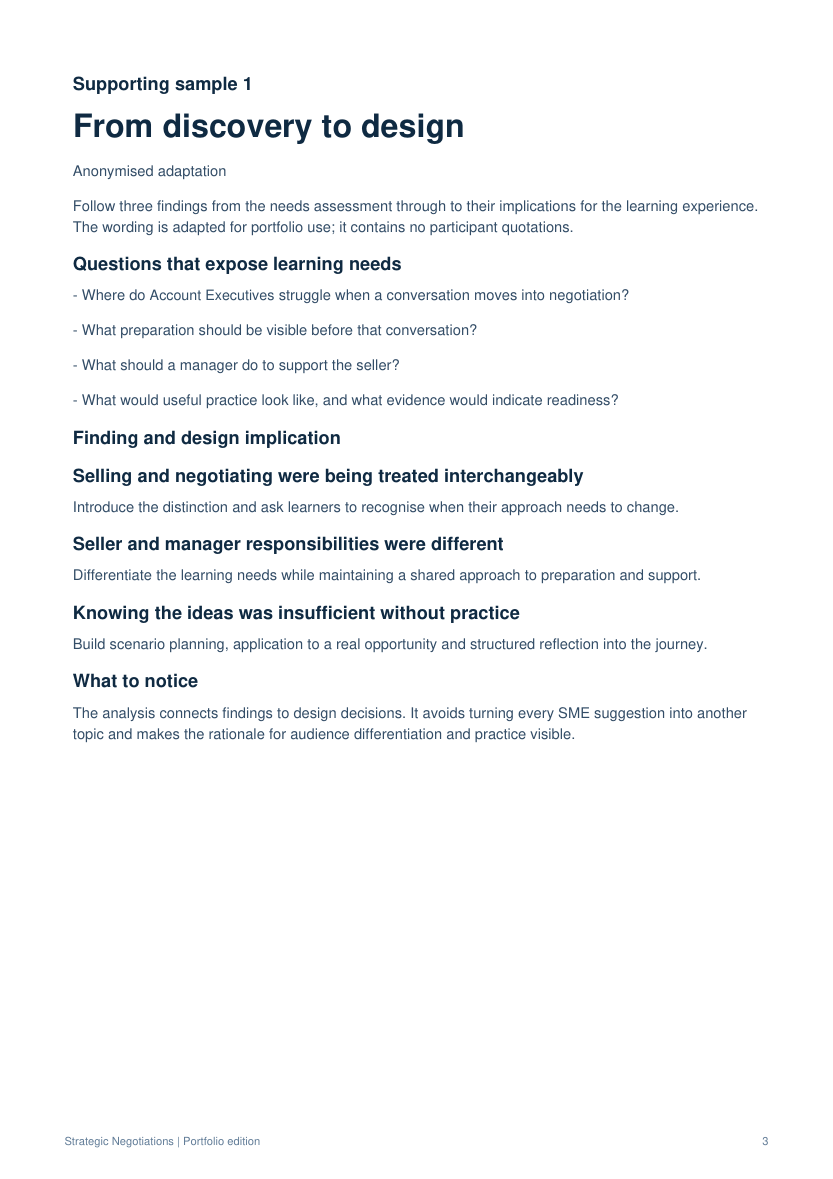
01SME discovery and qualitative synthesis
From discovery to design
Follow three findings from the needs assessment through to their implications for the learning experience. The wording is adapted for portfolio use; it contains no participant quotations.
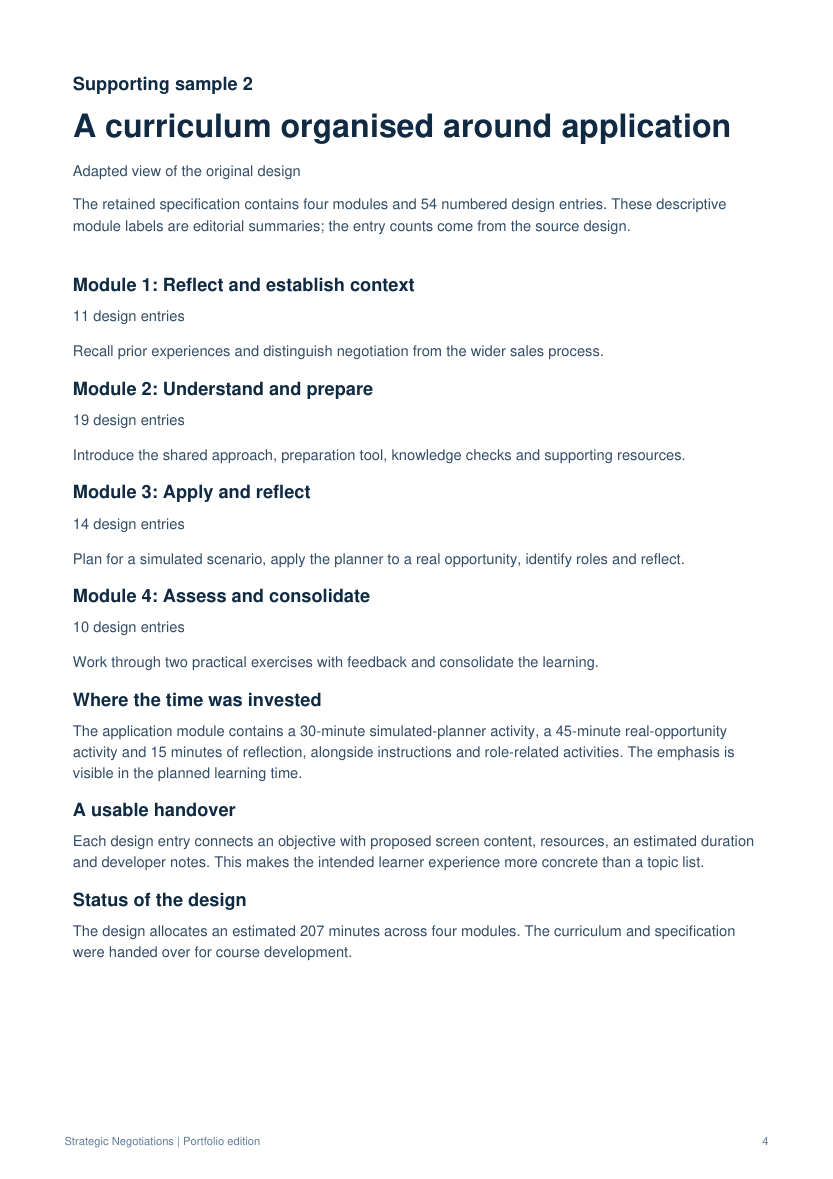
02Curriculum architecture and development specification
A curriculum organised around application
The retained specification contains four modules and 54 numbered design entries. These descriptive module labels are editorial summaries; the entry counts come from the source design.
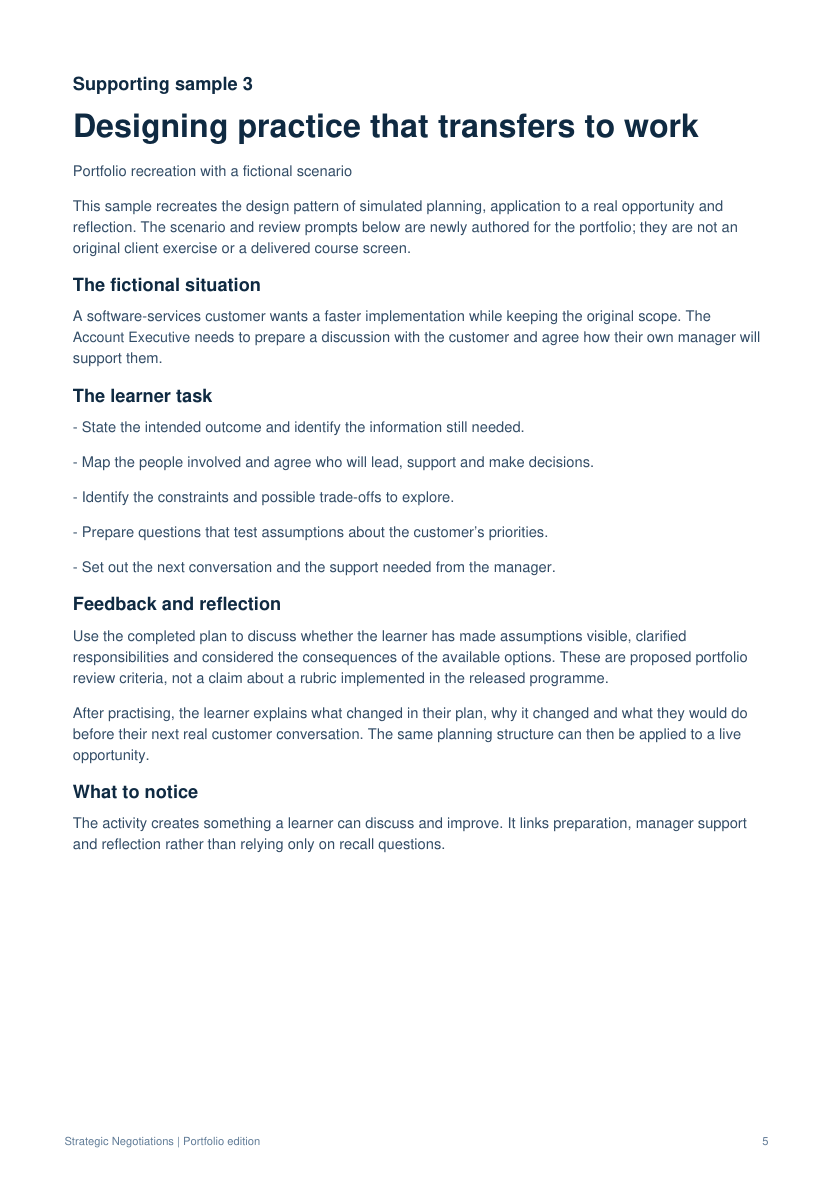
This sample recreates the design pattern of simulated planning, application to a real opportunity and reflection. The scenario and review prompts below are newly authored for the portfolio; they are not an original client exercise or a delivered course screen.
Reflection: The original documents make the research and design decisions visible. The separate portfolio samples explain the approach without presenting a recreation as a client artefact.
How I present my work
Original work and clearly labelled portfolio examples.
The samples make my contribution and design approach visible. Original artefacts show the work itself; edited extracts and portfolio recreations allow me to demonstrate the approach while respecting the confidentiality of the organisations involved.
1 · Original artefactsStoryboards, course media, plans and analysis extracts show examples of what I designed, developed or delivered.
2 · Edited extractsWhere confidential details have been removed from an original extract, the sample is labelled accordingly.
3 · Portfolio recreationsClearly labelled recreations demonstrate the structure and design approach of work whose original content remains private.